

In the rapidly evolving landscape of automation and control systems, electric actuators have emerged as indispensable components for driving mechanical processes with precision and efficiency. Among these, the electric linear actuator stands out as a versatile and widely used device, capable of converting electrical energy into linear motion. This blog will explore the fundamentals of electric actuators, their working principles, applications, and the benefits they bring to modern industries.

What is an Electric Actuator?
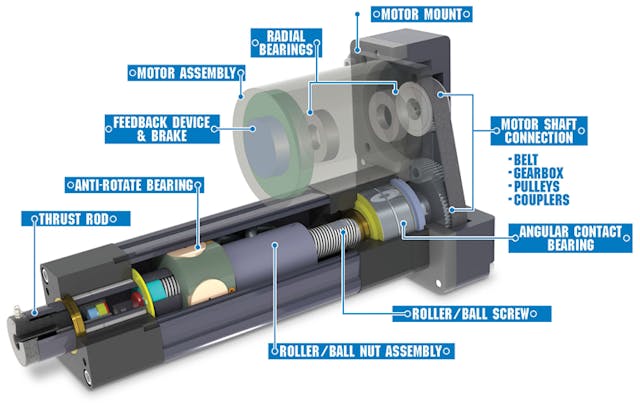
An electric actuator is a mechanical device that uses electrical energy to produce motion, typically in a linear or rotational form. In the context of linear motion, an electric linear actuator is designed to push or pull a load along a straight path. These devices are often used to control the position, speed, and force of a mechanism in various industrial and consumer applications.At its core, an electric linear actuator consists of:
1.Motor: Usually a servo motor or stepper motor, which provides the rotational motion.
2.Lead Screw or Ball Screw: Converts the rotational motion of the motor into linear motion.
3.Nut Mechanism: Engages with the lead screw to move along its length.
4.Control System: Includes sensors, controllers, and software to regulate the actuator's performance.
How Does an Electric Actuator Work?
The operation of an electric linear actuator is straightforward yet highly efficient. Here’s a simplified breakdown:
1.Power Supply: The actuator receives electrical power, which is typically in the form of AC or DC voltage.
2.Motor Activation: The motor converts this electrical energy into rotational motion.
3.Linear Motion: The rotational motion is transferred to the lead screw, which moves the nut mechanism along its axis. This movement can be either extension or retraction, depending on the direction of the motor.
4.Control: The control system ensures precise positioning, speed, and force by monitoring feedback from sensors and adjusting the motor accordingly.
Electric actuators are highly customizable, allowing engineers to tailor their performance to specific requirements, such as load capacity, speed, and stroke length.
Applications of Electric Actuators
Electric linear actuators are incredibly versatile and find applications in numerous industries. Some common use cases include:
1.Industrial Automation:
Material Handling: Electric actuators are used to automate tasks like lifting, lowering, and positioning heavy loads in manufacturing and logistics.
Machine Tools: They control the movement of cutting tools in CNC machines, ensuring precise machining operations.
2.Medical Equipment:
Hospital Beds: Electric actuators enable the adjustment of bed heights and angles for patient comfort and accessibility.
Surgical Instruments: They provide precise motion control for robotic surgical tools, enhancing accuracy during procedures.
3.Automotive Industry:
Seat Adjustments: Electric actuators power the linear motion for adjustable car seats.
Suspension Systems: They are used in active suspension systems to adjust ride height and improve vehicle stability.
4.Consumer Electronics:
Smart Home Devices: Electric actuators are used in automated blinds, doors, and other smart home systems.
Printers and Scanners: They control the linear movement of print heads and document feeders.
Advantages of Electric Actuators
Electric linear actuators offer several advantages over traditional hydraulic or pneumatic systems:
1.Precision and Control:
Electric actuators provide highly accurate and repeatable motion, making them ideal for applications requiring fine adjustments.
2.Energy Efficiency:
Unlike hydraulic systems, which often waste energy through fluid leaks, electric actuators are energy-efficient and environmentally friendly.
3.Compact Design:
Electric actuators are smaller and lighter, making them easier to integrate into space-constrained systems.
4.Low Maintenance:
With no fluids to leak or contaminate, electric actuators require minimal maintenance and have longer operational lifespans.
5.Quiet Operation:
Electric actuators operate quietly, reducing noise pollution in industrial and residential settings.
6.Scalability:
They can be easily scaled to meet the demands of small-scale consumer applications or large-scale industrial systems.
Design Considerations for Electric Actuators
When selecting or designing an electric linear actuator, several factors must be considered to ensure optimal performance:
1.Load Capacity:
Determine the maximum weight the actuator will need to handle, as this dictates the size and type of motor required.
2.Speed and Acceleration:
The desired speed and acceleration of the actuator must align with the application's requirements.
3.Stroke Length:
The distance the actuator needs to move (stroke) is a critical design parameter.
4.Environmental Conditions:
Consider the operating environment, including temperature, humidity, and exposure to dust or corrosive substances.
5.Integration with Control Systems:
Ensure compatibility with the control system, as electric actuators rely heavily on precise software and sensor integration.

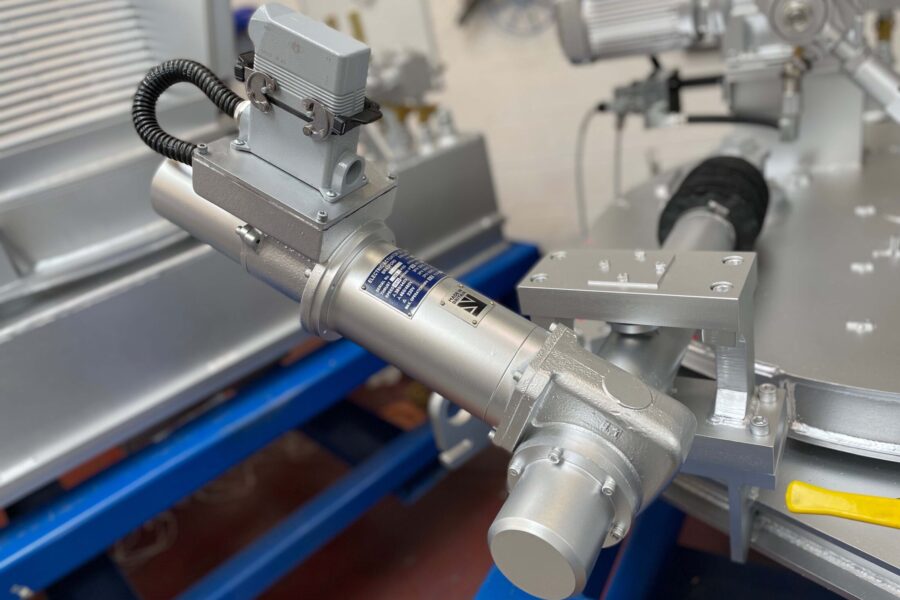
This actuator of 581-2664 from Caterpillar is our best-selling product and is used in models such as Wheel Loader 972, 966, 950M, 962M, and 966M.
Click on the picture above to learn more